The Art of Not Stepping In
Have you ever watched a child struggle with her shoelaces for so long that your own fingers started to twitch?
You know exactly where the loops belong. You could end the frustration in three seconds.
The shoe would be tied.
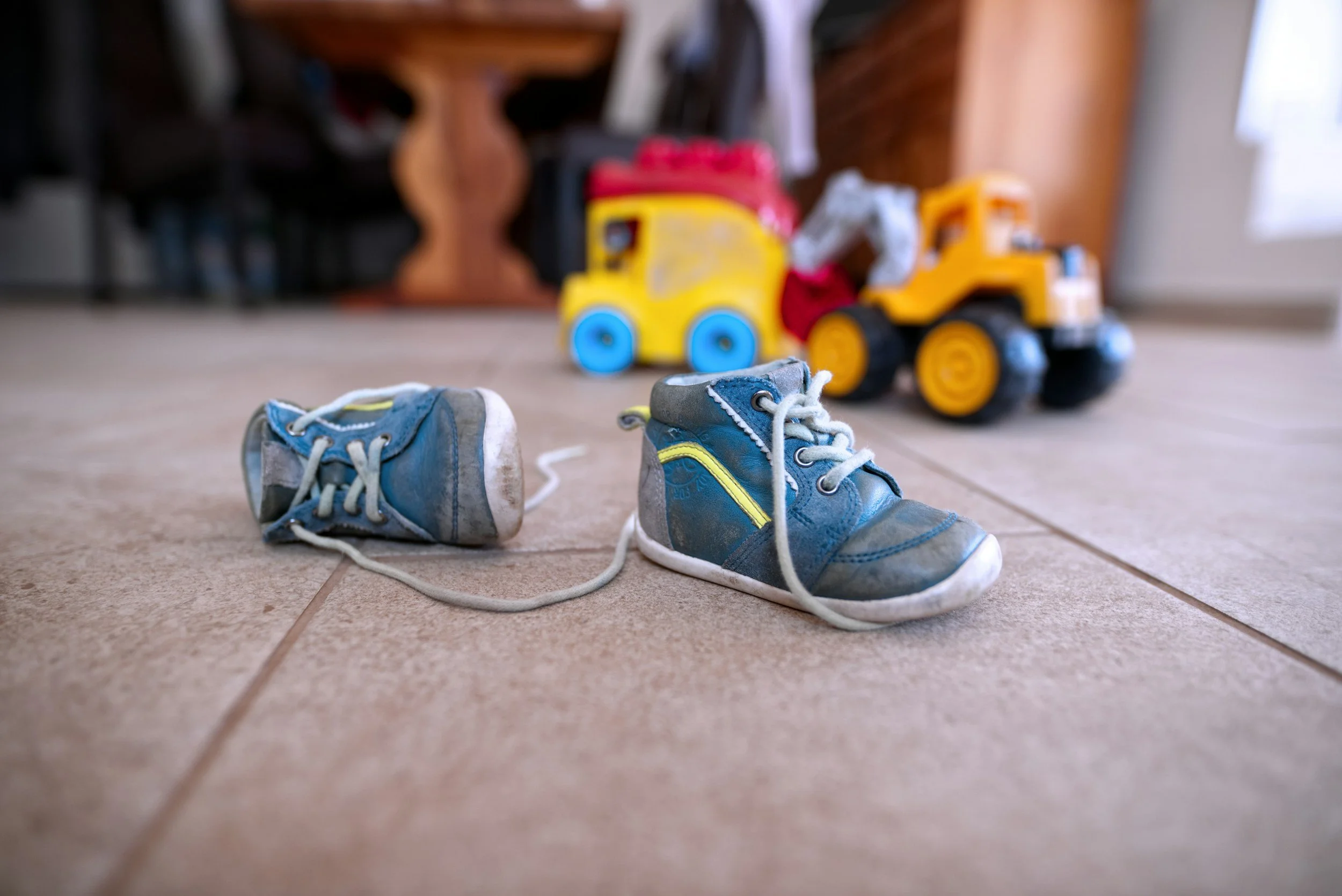
But her hands would not have learned.
I have watched some version of this impulse appear everywhere: in therapy, parenting, teaching, mentorship, leadership, and relationships.
We see where someone needs to go. We know how to help. And because we care, it can feel almost unbearable not to step in.
A skilled therapist can help a client complete a powerful movement. A masterful therapist knows how to create the conditions for the movement to become hers.
They may look identical in the room.
They do not create the same life.
Let me tell you a story:
I’ll call her Maya.
For thirty years, Maya had swallowed every no before anyone else could hear it. But as she spoke about her anger, her foot pressed into the floor. Her hands trembled. Strength began moving into her arms.
A no was taking shape.
And every clinically trained, deeply caring part of me wanted to help her get there.
I could have encouraged the Push.
Maya might have said no, cried with relief, and completed a beautiful movement.
But just before her arms moved, her shoulders folded inward and her eyes searched my face.
The glance was not interrupting the Push.
It was revealing the exact place the Push had always disappeared.
Her body was not only asking whether she could protect herself. It was negotiating what protection might cost.
Could she have this much force and remain connected?
That negotiation was not delaying the work.
It was the work.
I needed to stay there a bit longer and help her work through what was coming up, so the Push would be one she was fully engaging in [ more on that soon].
----
Here's why I'm sharing this:
The same thing happens when a parent finishes the task every time her child becomes frustrated.
When a teacher gives the answer before the student has learned how to think toward it.
When a partner rushes to remove every difficult emotion before the relationship learns how to hold discomfort.
The immediate problem gets solved. But the other person may never discover:
I can stay with this. I can struggle without falling apart. I can find my own way through. And the helper becomes exhausted, always anticipating, stepping in, and supplying the energy required to keep everything moving.
Sometimes the most loving thing we can do is position ourselves differently.
Close enough that the person does not struggle alone.
Far enough back that our competence does not replace her development.
This does not mean becoming passive or withholding leadership.
It means learning when to guide, when to wait, and when our desire to help is moving faster than another person’s becoming.
The shoe may take longer to tie. But eventually, her hands learn: I can do this.
Love,
Esther
P.S. If you are a therapist who wants to deepen your ability to recognize where a client’s nervous system is stuck, and how to work with Yield, Push, Reach, Grasp, and Pull, I teach the full clinical map inside the Somatic Embodiment recording.
And if you are exploring this in your own life, relationships, parenting, teaching, or leadership, this framework may change how you understand helping altogether.
You’ll also hear Vanessa’s story: what changed when we recognized the developmental pattern underneath what she already understood, and the ripples that followed once the work was positioned differently.