When the Therapist Becomes Part of the Pattern
Don't hate me for being bold.
But I have a question I haven't been able to stop thinking about.
What if the movement your client keeps avoiding...
...is actually the movement your nervous system has the hardest time tolerating?

Not because you're a bad therapist. Because you're human.
I taught this to a room filled with exceptionally trained trauma therapists.
Therapists who have been practicing for decades. EMDR Consultants. Sensorimotor practitioners. IFS therapists. Practice owners. Supervisors. One therapist had been doing this work for over 25 years.
Another had spent years immersed in complex trauma. Another supervises other clinicians. These are not therapists who need another protocol. They've already studied the protocols. And yet, over and over again, I watched experienced clinicians have the same realization. Not...
"I learned a new intervention." But... "I've never seen therapy this way before."
Because here's what I believe.
Sometimes the movement that never fully emerges in the client... is the very movement we, as therapists, struggle to tolerate.
The client begins to push...and we soften too quickly.
The client begins to reach...and we rush in before the reach has fully organized.
The client begins to slow...and we mistake yielding for collapse.
The client pulls away...and something inside us starts working harder to restore connection.
None of this happens because we lack skill. It happens because our nervous systems enter the room too.
And sometimes our urgency quietly completes the movement the client was just beginning to discover for themselves.
That single distinction can change an entire treatment plan.
Inside The Hidden Movements That Change Therapy, I walk through how to recognize these moments in real time, how to distinguish movement from symptom, and how to begin seeing the procedural organization beneath the story.
I've included a few messages from therapists who attended the masterclass below.
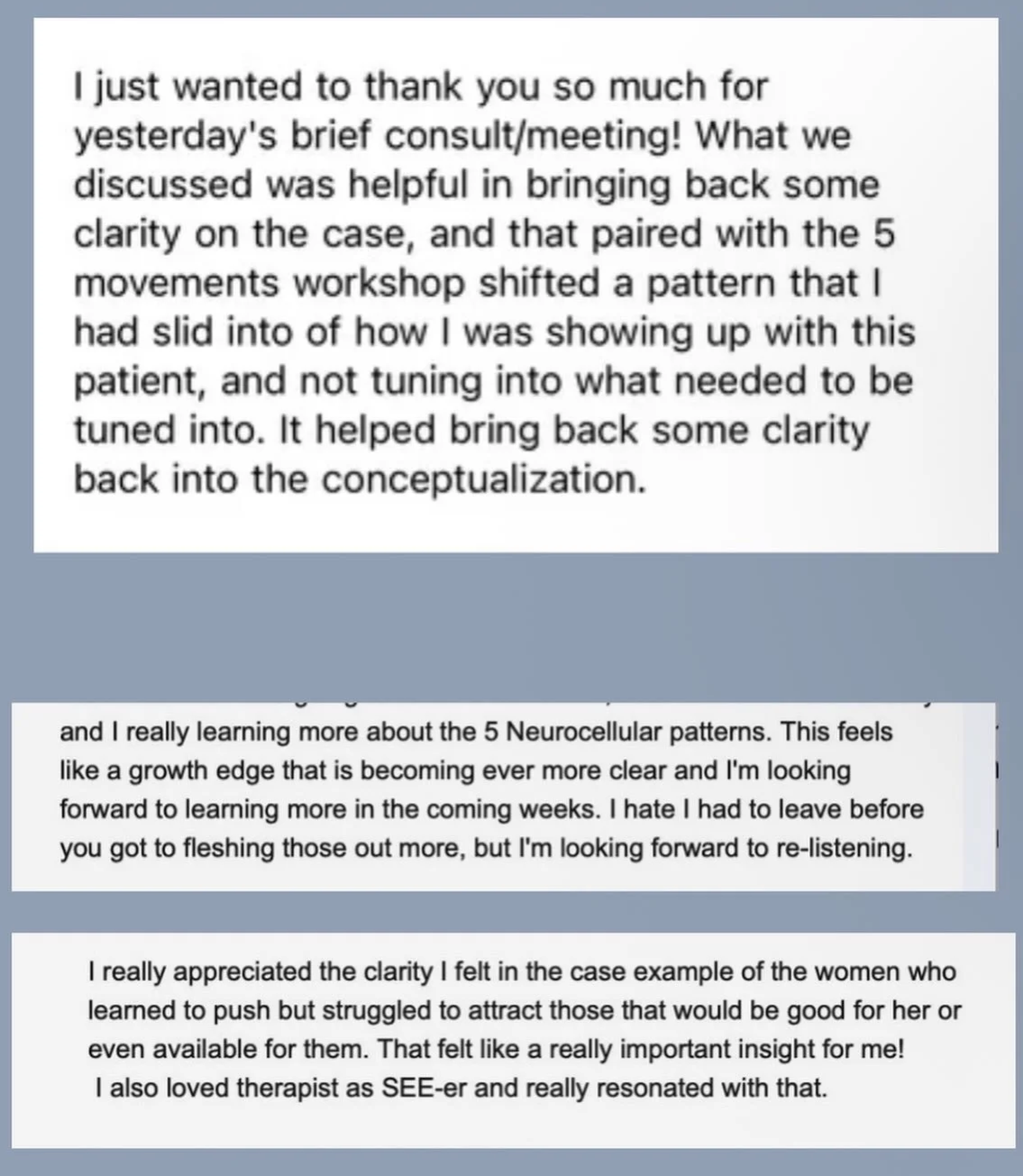
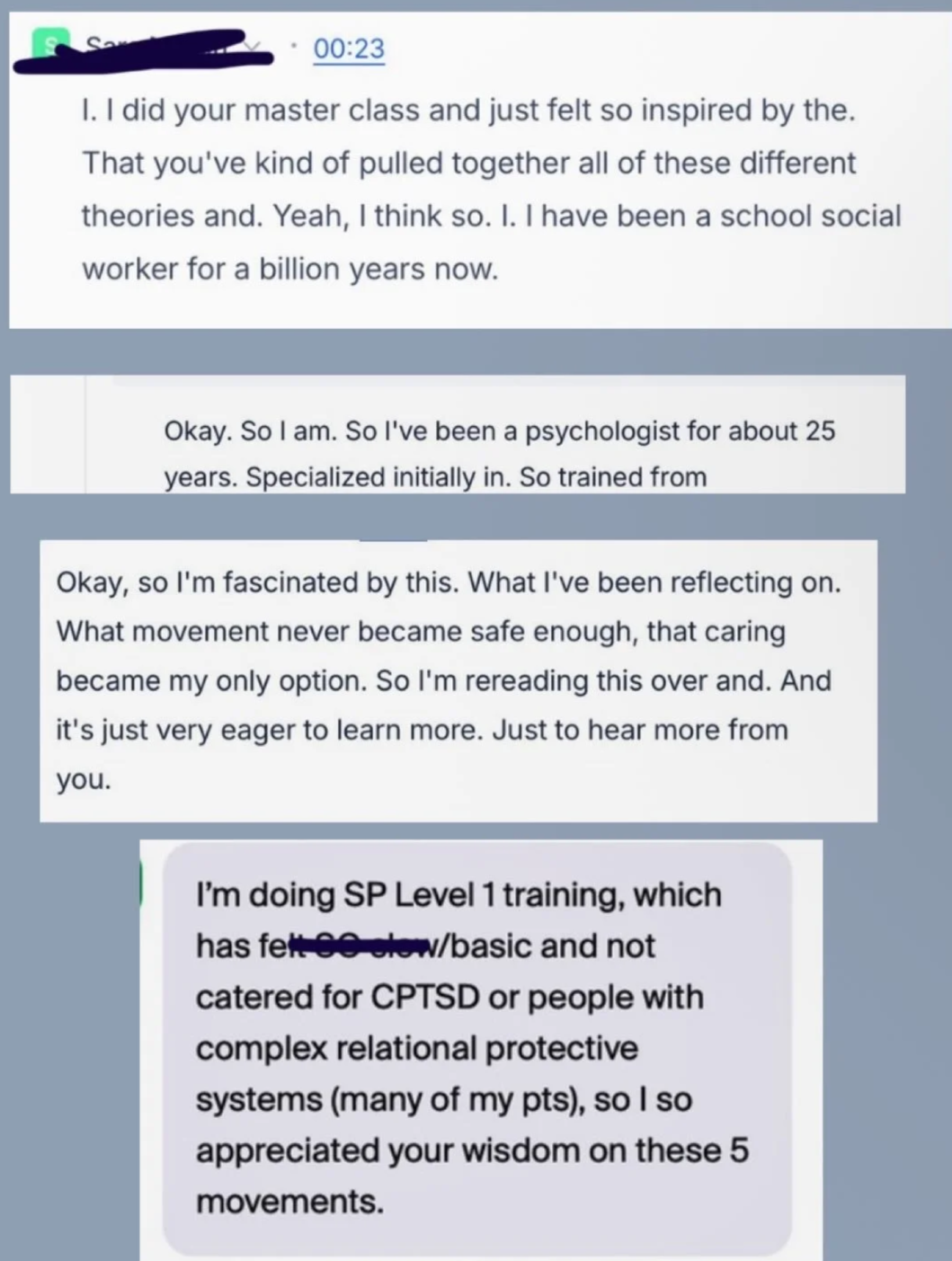

These are the kinds of messages that make me believe this conversation matters.
Not because therapists are learning more. Because they're beginning to see differently.
If you're the kind of therapist who has invested years, maybe decades, into becoming deeply skilled, I think you'll appreciate this conversation.
The replay is available now.
With love,
Esther