Who Do You Need to Become for the Life You Want?

I can apparently formulate a complex trauma case faster than I can choose dining room chairs.
Which is a pretty accurate snapshot of my life right now.
I’ve been to HomeGoods more times than I can count these past few days. At this point, I’m basically friends with the people who work there.
And oh my God, if you could see my dining room chairs. They’re those ugly folding chairs you pull out when too many people come for dinner. Except they’re not extra chairs.
They’re THE chairs.
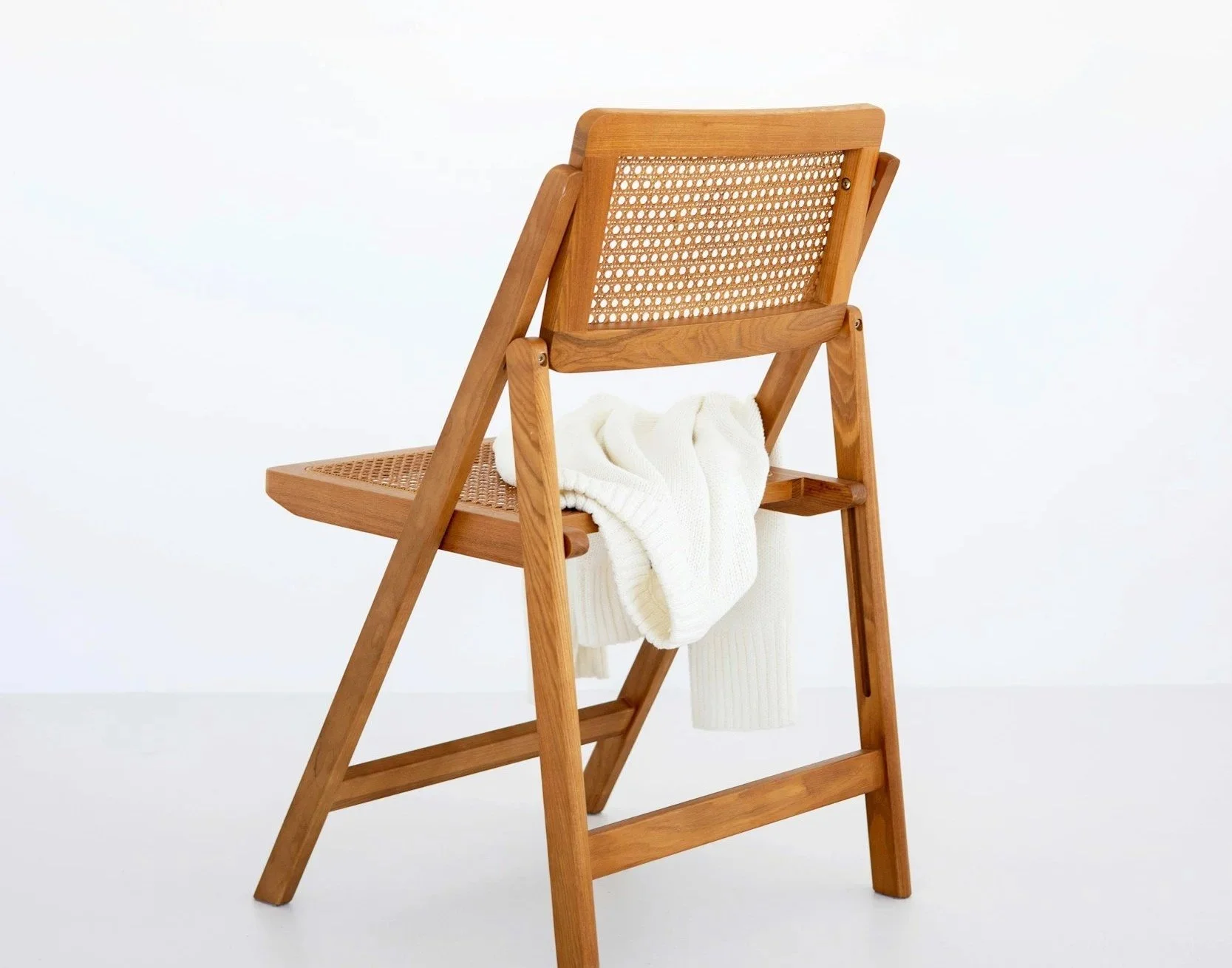
Meanwhile, I have two fluffy rugs I’ve laid down, picked up, moved, stared at, sent pictures of to friends, changed my mind about, and laid down again.
I think I need bigger ones. Apparently, this is difficult for me.
But yesterday, right in the middle of all of this, a therapist friend called me about a case. I told her I had ten minutes. Twenty minutes later, I was completely immersed.
The Question Beneath the Question in Case Consultation
She was working with a woman trying to make an enormous decision about her marriage. Her husband had cheated multiple times. There were children involved. History. Hurt. A whole life built together.
And my friend wanted to know: How do I help her make the decision?
It was a reasonable question.
But as she talked, I found myself getting curious about something else.
I wanted to understand the woman who had to make it.
What had she learned about having a voice inside of relationships? Could she know what she wanted when someone she loved wanted something different? Could she disappoint someone and remain connected to herself? Could she hold a boundary? Could she access enough of her own personal power to make a choice—and then stay with herself through everything that choice would require of her?
Because suddenly it occurred to me: Making the decision wasn't going to be the end of this woman's story.
If she left, it would be the beginning of the next one.
There would be a million more choices waiting for her there.

Her children. Her ex. Money. Boundaries. Dating. Parenting. Loneliness. The relationships she chose next. The way she wanted to live.
And if she stayed, there would be choices there too.
So somewhere in that conversation, the question changed. It wasn't only:
What should she do? It became:
Who does she need to become so she can actually have choice?
And I've been thinking about that question ever since.
Because I don't think it only belongs in a therapy room.
Sometimes We’re Trying to Make a Choice We Don’t Yet Have the Capacity to Hold
There are moments when we know exactly what we want. And still can't seem to do it.
You know you need to say no. But the word disappears when the person is standing in front of you. You know the relationship isn't working. But every time you imagine leaving, something inside of you collapses.
You want deeper intimacy. But the moment someone gets close enough to actually see you, you find yourself pulling away.
You want to grow your business, take the opportunity, make more money, become more visible. But as soon as it starts happening, you shrink.
We can look at these moments and think: Why can't I just do the thing?
Maybe that's not always the most useful question.
Because sometimes we are asking ourselves to make a choice that requires a version of us we haven't fully developed yet.
Not a better version. Not a more healed, optimized, impressive version.
A version with more capacity.

More capacity to disappoint.To receive. To be seen. To tolerate uncertainty. To hold a boundary without immediately repairing the other person's discomfort. To want something without apologizing for wanting it. To have more without unconsciously finding a way to make ourselves smaller again.
The Life You Want Will Ask Something of You
I think we talk a lot about creating the life we want. We talk less about what that life will require us to be able to hold.
Because getting something and having the capacity to live inside of it are not the same thing.
You can find the relationship. Can you tolerate being deeply loved?
You can create the boundary. Can you tolerate someone being angry about it?
You can become successful. Can you remain visible when more people are looking?
You can leave the relationship. Can you stay connected to yourself when you're lonely three months later?
You can finally say what you mean. Can you remain in the room when someone doesn't like what you said?
The thing we want often asks us to develop the capacity to live with what comes after we get it. And maybe that's why some changes cannot be rushed.
Sometimes the Work Comes Before the Choice
This was the piece I was trying to explain to my friend. Maybe her client eventually leaves. Maybe she stays.
I don't know.
But I might spend months helping this woman develop capacities that, on the surface, look like they have very little to do with her marriage.

Her ability to know what she wants.
To feel her own strength.
To experience a boundary without immediately fearing the loss of connection.
To have a position. To stay present when someone disagrees. To discover that another person's disappointment doesn't have to mean her annihilation.
And slowly, something changes. Not because someone finally tells her what to do.
But because there is more of her available to do the choosing.
That distinction matters to me.
Because I don't want to help someone borrow my clarity.
I want them to develop access to their own.
So Let Me Turn the Question Toward You
Maybe there is something you're circling right now.
A conversation. A relationship. A boundary. A business decision. A move. A beginning. An ending. Something you desperately want. Something you already know.
And perhaps you've been asking: What should I do?
Maybe there's another question worth sitting beside it. Who do I need to become to hold the life I'm asking for?
What would you need more capacity for? What would you need to be able to tolerate? What would you need to stop abandoning in yourself? What would need to become possible inside of you so that the thing you're trying so hard to do becomes something you can actually live?
Because sometimes transformation isn't finally making the decision. It's becoming someone who has choices.
And from there, the decision may look very different.
Anyway, I'm going back to my dining room chairs.
Apparently I have some choices of my own to make.
With warmth,
Esther
P.S. I genuinely want to know what this brings up for you. If there's something in your life you're circling, hit reply and tell me: Who do you need to become to hold what's next?
And yes, I am still accepting dining room chair recommendations, fluffy rug opinions, and recipes. Please help.