"Dimples," They Called Me: What Every Trauma Therapist Needs to Know About Their Own Emotional Range

"Dimples," they called me.
But underneath, here's what no one saw.
When loss came to my family, I didn't grieve.
I smiled harder.
I became the one who kept the room light. The one who knew, without being told, that someone had to hold the joy while everyone else fell apart.
So I did.
For years.
What I didn't realize was what that cost me.
I had become so good at being the dimples in the room that I lost access to my own sadness. I didn't know how to cry. I knew how to stay composed. How to make the moment easier for everyone else. How to keep things moving.
But I didn't know how to let myself be the one falling apart.
What the Body Was Holding
Here's what I've learned since, as a person, and as someone who has spent fifteen years sitting with other people's pain:
The body doesn't forget what the smile was covering.
Pat Ogden, whose work on sensorimotor psychotherapy changed how I understand adaptation, calls these habitual action tendencies, the automatic, procedural, pre-conscious ways the body organizes itself in response to its relational environment. They don't feel like choices. They feel like personality. Like just the way you are.
My habitual action tendency was to regulate everyone else's nervous system before attending to my own.
I was good at it. I had been practicing since childhood.
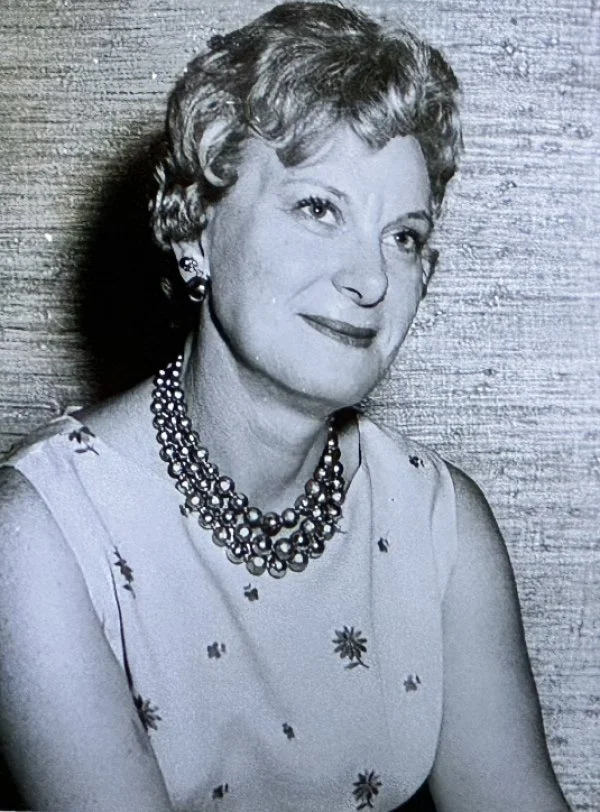
Virginia Satir wrote that the roles we take on in our family systems become the architecture of how we move through the world.
The Placater. The Distractor. The one who keeps the peace.
These roles aren't weaknesses, they are brilliant adaptations to the emotional climate we were formed in. They kept us connected. They kept the room safe.
What Satir also understood was that these roles come with a cost.
When we spend years being what the room needs, we can lose track of what we need. We become fluent in other people's emotional states and strangers to our own.
That was me.
Dimples.
Ron Kurtz, the founder of Hakomi, spoke about the difference between the map and the territory.
We build maps, protective, organized, brilliantly efficient maps, of how to be in the world. And then we mistake the map for the full landscape.
My map said: be the light. Hold the joy. Make it easier.
What I didn't know was how much of the territory I had stopped visiting.
Peter Levine's work on somatic experiencing taught me that when we inhibit one part of our emotional range, when we brace against sadness, or grief, or falling apart. we don't just lose access to that one feeling.
We lose range across the board. Joy flattens. Presence narrows. The full register of being alive gets smaller.
This is what nobody tells you when you become a trauma therapist.
You can be extraordinarily skilled at holding other people's pain, and quietly, efficiently, without knowing you're doing it, be living in a narrow register yourself.
Not because you haven't done your own work. Because the very training that made you good at this work can reinforce the same adaptation you built in your family system.
Be the regulated one. Hold the room. Don't take up too much space with what you're carrying.
What Learning to Be Sad Gave Me Back
The turning point didn't come through a training.
It came through life.
Through a season of loss I had to actually feel. Through sitting with sadness that had nowhere to go except through me. Through finally not having the option to metabolize it into something useful.
And what I discovered, slowly, in my body, not just in my head, was that I had been living inside a portion of myself.
John Bowlby spent decades mapping how early attachment shapes the nervous system's fundamental expectations of relationship.
What he found was not just that early love matters. It's that the quality of early emotional attunement, whether our feelings were welcomed, witnessed, metabolized alongside us, becomes the template for how we relate to our own inner experience for the rest of our lives.
When feelings were not safe to have, when the room needed you to be the dimples, the nervous system learns to route around them. Not as a failure. As an act of love.
The healing, when it came, was also an act of love.
Learning how to be sad, really sad, on my own and with loved ones, without immediately reaching for something useful to do with it, changed more than my relationship with grief.
It changed how present I am with the people I love.
How available I am for joy, real joy, not performed joy.
How honestly I can meet myself.
How much range I bring into the rooms I work in.
Because when we reclaim access to what we'd routed around, something opens.
Life gets bigger.
What This Means for the Trauma Therapy Work
Bessel van der Kolk wrote that the body keeps the score. What he might also have said is that the body keeps the gift, the unlived range, the unfelt grief, the joy that's been waiting on the other side of the sadness we haven't let ourselves have yet.
The therapists I watch truly integrate, not just clinically, but as human beings, they get this back.
Not by working less. Not by caring less.
By finally being held enough that they stop holding everything.
This is what I mean when I talk about the self of the therapist, not as a professional competency to develop, but as a living, breathing, feeling human being who brings their full range into the room.
Selma Fraiberg wrote about the ghosts that visit the nursery, the unresolved material from our own histories that shows up in the present.
As therapists, our ghosts visit our sessions.
The client whose grief we can't quite reach. The one whose joy makes us slightly uncomfortable. The one whose falling apart quietly activates our own old directive to hold the room.
The work we do with ourselves, the willingness to go to our own “basement”, as I call it, is not separate from our clinical work.
It is our clinical work.
Maybe that's the thing life keeps teaching me, that the places we most want to bypass are often the exact places trying to deepen us.
We think growth will come through the training. The book. The next framework. The room we intentionally choose.
But sometimes it's waiting somewhere far less glamorous.
In the relationship dynamic we keep managing instead of naming.
In the ache sitting quietly underneath our competence.
In the season of life we wish would hurry up and resolve itself already. In the parts of us we'd rather outgrow than actually sit beside.
For me, learning how to be with sadness changed everything.
And the joy that came back afterward, it was the same joy. The dimples were still there.
They just had something real underneath them this time.
So I want to ask you something.
What in your life are you trying to get past, that might actually be the doorway?
To deeper work. Deeper presence. Deeper aliveness.
To the kind of range that makes you not just a more skilled clinician, but a more fully alive human being.
If you know your next level as a trauma therapist requires more than another framework, if it asks for greater emotional range, deeper clinical presence, and more integrated therapeutic work, Trauma Mastery may be your room.
Esther Goldstein LCSW is a trauma specialist, EMDR consultant, and author of EMDR for Anxiety (New Harbinger). She runs Trauma Mastery, an advanced clinical training cohort for experienced trauma therapists, alongside a nine-clinician group practice in Long Island and NYC.
—
Frequently Asked Questions
Why do trauma therapists struggle with their own emotional range?
Trauma therapists are trained to regulate, contain, and hold emotional complexity for others. Over time, those same adaptive strengths can become habitual patterns that narrow access to parts of their own emotional experience—particularly vulnerability, grief, joy, or emotional spontaneity. This doesn’t mean a therapist is doing something wrong; it often reflects long-standing relational adaptations that were once protective and became professionally reinforced.
Can trauma therapists become emotionally disconnected without realizing it?
Yes. Emotional disconnection doesn’t always look like numbness or burnout. It can look like competence, composure, hyper-functionality, and being the person everyone relies on. Many highly skilled therapists remain deeply present for clients while unconsciously limiting access to their own emotional range.
Why does a therapist’s emotional range matter in trauma work?
The emotional range a therapist can access in themselves often shapes the emotional range available in the therapeutic relationship. Therapists who have greater access to grief, joy, uncertainty, vulnerability, and embodied presence may be better positioned to support clients in those same states.
What is the “self of the therapist” in trauma therapy?
The “self of the therapist” refers to the therapist’s internal emotional world, relational patterns, nervous system responses, and personal awareness that influence clinical work. Advanced trauma training increasingly recognizes that therapeutic effectiveness is not only about technique, but about the therapist’s own capacity for emotional presence and integration.
How do trauma therapists deepen their clinical presence?
Clinical depth often expands through a combination of advanced training, consultation, personal reflective work, nervous system awareness, and willingness to explore unresolved personal adaptations that may shape therapeutic presence.
What is Trauma Mastery?
Trauma Mastery is an advanced clinical training and consultation experience for trauma therapists who want to deepen both their technical expertise and their emotional range as clinicians.